
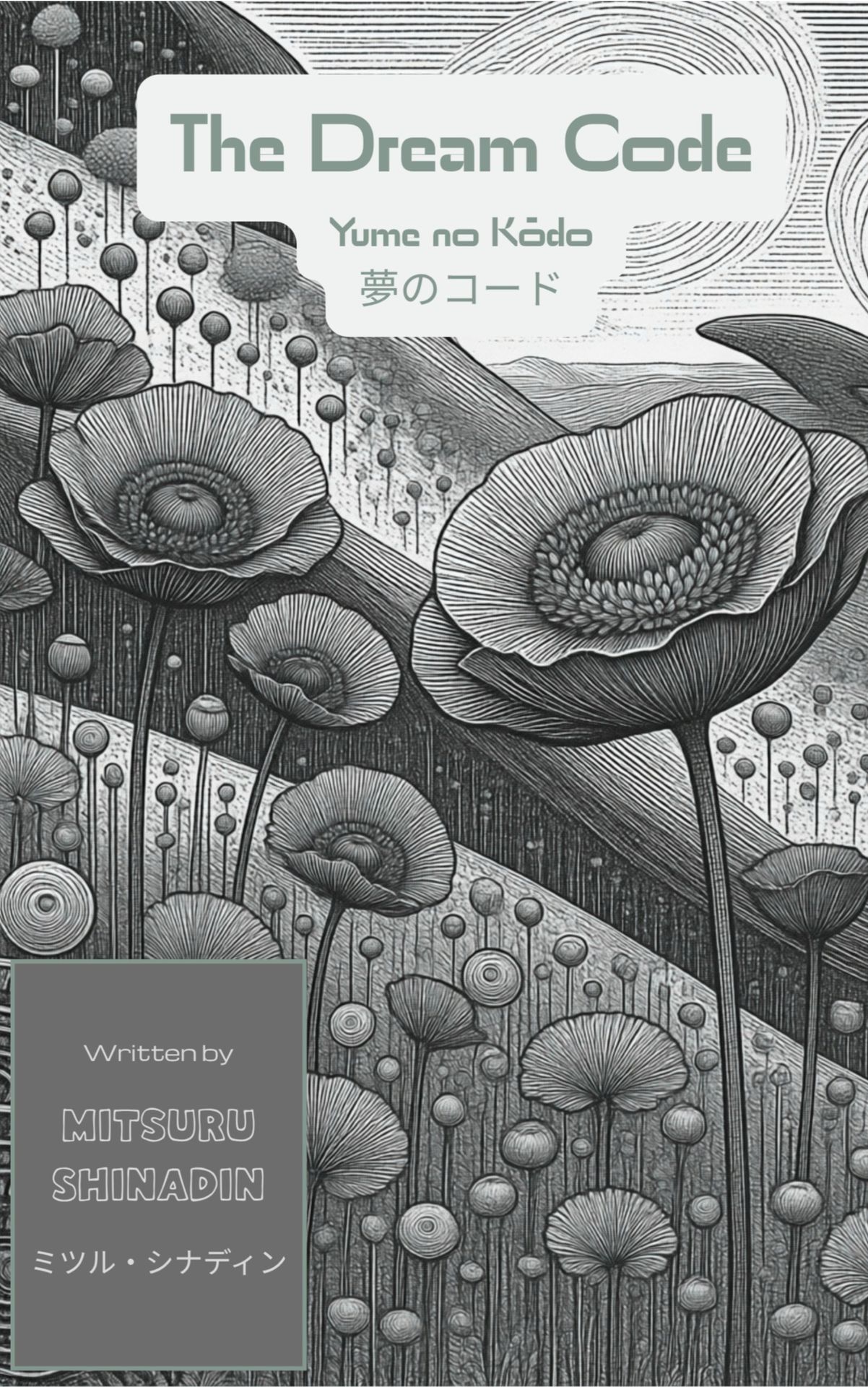
 Picture this. It's 2047. The world outside
your window is mostly rubble. Two apocalyptic events, both unfolding in 2044
and not fully over until the end of 2045, have taken almost everyone you might
have known. What's left of humanity is crammed into a handful of safe pockets,
and the biggest one is a place called The City of the Good. That's where we
meet Mitsuru Shinadin, a fifteen-year-old boy who keeps having the same dream
over and over. Voices calling from a forest. A group of girls his age. A crowd
of villagers looking at him like he's the answer to something he doesn't
understand yet. And in the hand of one of those girls, a scrap of paper with a
single year written on it: 2025.
Picture this. It's 2047. The world outside
your window is mostly rubble. Two apocalyptic events, both unfolding in 2044
and not fully over until the end of 2045, have taken almost everyone you might
have known. What's left of humanity is crammed into a handful of safe pockets,
and the biggest one is a place called The City of the Good. That's where we
meet Mitsuru Shinadin, a fifteen-year-old boy who keeps having the same dream
over and over. Voices calling from a forest. A group of girls his age. A crowd
of villagers looking at him like he's the answer to something he doesn't
understand yet. And in the hand of one of those girls, a scrap of paper with a
single year written on it: 2025.
That's the hook that opens The Dream Code, and it's a good one, because it doesn't waste time. Within the first few pages you already know something is wrong with time, wrong with memory, and wrong with the line between dreaming and living.
When Sleep Stops Being Just Sleep
Mitsuru eventually brings his recurring dream to Genryu, the Grandmaster of the city, an old man who carries a ring that isn't just jewelry. Genryu tells him something no fifteen-year-old wants to hear: those aren't dreams. They're a summons. Mitsuru's real task is to travel back twenty-two years, to 2025, track down the people calling out to him, and then guide them safely through the disasters of 2044 and 2045 until he can bring them home to the City of the Good.
Here's where the book earns some real credit. A lot of time-travel stories trip over their own rules within a few chapters. This one sidesteps the usual paradox headache by never sending Mitsuru's body anywhere. Instead, his consciousness slides into the body of a thirty-seven-year-old man named Kanzaki Tahiru, while Kanzaki's mind is pulled forward into Mitsuru's teenage body in 2047. Two people, two timelines, one shared soul-swap. It's a clean fix, and it opens the door to something more interesting than a typical save-the-world plot: what happens to a person's identity when they're quite literally living someone else's life?
Mitsuru doesn't take the easy route either. He could have pushed Kanzaki's memories aside and taken over completely. Instead, he chooses to carry both lives, refusing to erase the man whose body he's borrowing. It's a small decision on paper, but it says a lot about who this character is, and it's the thing that eventually draws Ava Fukushira into his orbit.
A Love Story That Starts in the Space Between Dreams
Ava isn't an ordinary love interest. She can walk through dream realms, and that's how she first finds Mitsuru, while he's still wearing Kanzaki's face. She watches him choose loyalty over convenience, and that's what pulls her in. Their romance builds slowly, stitched together by trust and the strange logistics of loving someone who technically belongs to two different points in time.
Mitsuru isn't only trying to win Ava over, though. Four more girls, Yuki, Poi, Shika, and Jing, come into the story, each one tied to his larger mission, each one a piece of the puzzle he has to solve before 2044 arrives and takes everything again. Around them stands a cast that gives the world its weight: Kamen Minora, who becomes central to humanity's last stand, and Aanza Arachi, the antagonist whose dark power is quietly steering the whole disaster from behind the curtain.
And then there's the Kuro Civilization, a race of gorilla-like beings sealed underground for generations, whose eventual breakout triggers something that reads like a zombie apocalypse dialed up several notches. It's the kind of threat that reminds you this isn't just a romance dressed up in sci-fi clothing. There are real stakes, real monsters, and a body count that matters.
Where the Story Actually Comes From
The author isn't shy about where the inspiration came from. Japanese manga, anime, and video games shaped this book from the ground up, even though it's written in English. The goal with The Dream Code was to take the emotional, character-first storytelling that light novels do so well and build something original out of it rather than copying a formula. Years spent talking with manga and anime fans from all over the world, mostly in online communities built around shared obsessions, fed directly into the way this story treats hope and human connection as its real engine, even when the setting is falling apart.
That mix of personal history and genre love is probably why the book feels less like a checklist of tropes and more like something the author genuinely needed to write.
Where to Find It
Readers who want to check it out can preview The Dream Code on Amazon, and anyone curious about what's coming next in the series can follow along at the official page, where the author regularly posts updates on the ongoing development of the story.